Sunday, September 5, 2010

Seeking Édith: Dieu réunit ceux qui s'aiment


“Je veux voir Édith Piaf !” 

She couldn’t have been very old, the little French girl who spoke her wish, but her pouty proclamation could have come from my own mouth.  I also wanted to see Édith Piaf!  Where WAS she? 

I’m in Père Lachaise cemetery, standing beside a French family staring squinty-eyed at a map, near the exit on Avenue Gambetta.  They, like me, have traveled from tomb to tomb for hours à la suite.

Elle est loin, chérie, loin . . .

I could tell that no one in her family especially cared to see Édith, and that she, unlike me, would not be able to return the following day, seeking Édith, dedicating a day to her.

When I taught high school French, we sometimes listened to Édith Piaf in class.  The students all knew “La vie en rose.”  No one knew “L’hymne à l’amour.”  It has become my favorite. 

The first two-thirds of the song is typical love song fare . . . a woman making a lot of foolish, fabulous promises, offering to do things no would ask her to do to prove her love.  She says she’d décrocher la lune (unhook the moon) and aller au bout du monde (go to the ends of the earth) and [se] ferais teindre en blonde (have her hair dyed blond), renierais [sa] patrie et [ses] amis (deny her friends and her country) if her beloved asked her to. 

After this crescendo of hollow promises, a laundry list of lovesick clichés, I always begin to feel vaguely vexed with Édith.  Why are women endlessly offering to change themselves, to deny who they are and what they love to be loved?  What is this Sam-I-Am vision of relationships?  (Would you love me in a box?  Would you love me with a fox?)  I understand it.  I’ve done it, even, but why fall in love with a brunette, then ask her to dye her hair blond?  Who’s the man who could say I love you then make that kind of request?   

But that’s when the song changes. 

Si un jour la vie t'arrache à moi
Si tu meurs, que tu sois loin de moi
Peu m'importe, si tu m'aimes
Car moi je mourrai aussi . . .
Nous aurons pour nous l'éternité
Dans le bleu de toute l'immensité
Dans le ciel, plus de problèmes
Mon amour, crois-tu qu'on s'aime?...

. . . Dieu réunit ceux qui s`aiment!

If one day life snatches you from me
If you die, if you’re far from me
It doesn’t matter, if you love me
Because I’ll die, too . . .
We’ll have for ourselves eternity
In the blue of all immensity
In the sky, no more problems
My love, do you believe that we love each other?

 . . . God reunites those who love each other.

Si tu meurs . . .  She’d written the song in September of 1949, seemingly about the love of her life, boxer Marcel Cerdan.  Just a month later, when he was taking a plane from Paris to New York to see her, their story ended.  The plane crashed.  Perhaps you remember the scene from the 2007 film about her life, La Môme (La Vie en Rose in English).  “L’Hymne à l’amour” became one of her most famous songs.  How many times had she sung it afterwards?  Confirmed that the “if” had become a “when”?

Love seems to me both defined by its fragility and its foreverness.  A fractional change in circumstances on an arbitrary afternoon can shift the scale from love to unlove, can cement a decision to close the door, lock it, throw the key in the Seine. 

I imagine the heart as a vast locker room, each of the occupied lockers belonging to someone you’ve loved.  Some lockers are almost empty . . . a yearbook picture, a note passed in class, a ticket stub.  Others, full to overflowing.  You open them, and like a slapstick scene from the halls of high school, the contents spill out, an avalanche of almost.  Almost just right.  Almost the one.  Almost enough.  Almost three years.  The day you close it, you have to slam your shoulder against it to get everything to fit inside.  Then, you go to the weight room to work out.  People don’t cry in weight rooms. 

My friend Kim had once compared love to a pillow . . . hard to destroy.  Malleable, yes, but durable.  I agree with that, too.  The lockers are like fireproof safes.   Even when we’ve ceased to rummage through them, forgotten what all they contain, they remain, never really cleared of their contents. 

I also believe that love is unlinear, that we travel in orbits, that we loop back around and cross paths with the people we’re meant to meet and re-meet.   A few weeks ago I bade goodbye to my friend Karen on the Pont des Arts.  She has been in Paris for two years, in France for the past four.  We first met ten years ago in Montpellier.

-I’m afraid that if I leave, I won’t be able to come back.  Or that it will be harder.  
-I know.  I always feel that way, too . . . but look at us. We’ve both come back so many times.  We always come back.  It’s how we are. 

Dieu réunit ceux qui s’aiment. 

The last time I’d left France.  I sobbed, sometimes secretly, sometimes not, for weeks as I slept beside the person I’d come back for. 

-It feels like France is the other man, he’d said once.   

When he and I parted ways, I went back to France.  Sometimes, when I was there and I missed him, I tried imagining he was dead.

-Why? 
-So that I’m not angry with him.
-I didn’t realize you couldn’t be mad at someone who’s dead.
-Maybe you can . . . but you try to remember the good things.  And you try to make peace with the idea that you won’t be hearing from him again.

Strangely, pretending he was dead was a strategy that he’d suggested, once, when I said I didn’t know how to respond to inquiries about him, about us.

-Just tell them I died.  They’ll quit asking.
-Really?
-Yeah.  He demonstrated: Oh him?  Yeah, he died.  Then he looked very sad for a moment, as if he was honoring his own memory, observing a moment of silence.  Then you change the subject. 

Not far from the Cimetière Père Lachaise, in a non-descript building where she once lived, is the Musée Édith Piaf.  Visitors require appointments.  The first full song I hear as I walk in is “L’hymne à l’amour.”


I think of the apartment-turned-museum as a life-sized locker with its memorabilia guarded by a tiny dog named Opium and a man named Bernard.  In an article in English lying on one of the tables, the gardien is interviewed.  He reveals that met the singer as a teenager at the insistence of his parents.

As he looked at her, sitting a blue couch that now resides in the museum, in a bathrobe, mal-peignée, he thought:  This isn’t a great singer.  She isn’t even beautiful.  Then, he said, he heard her sing.  He asked to watch her practice backstage for the next three months. 

Afterwards, I walk back to Père Lachaise, determined that this time I will find Édith Piaf.  When I arrive at her gravestone, looking at the dates of her life, I remember the beginning of a framed letter hanging in the museum, a run-on gush of thoughts on growing older:

Tu sais que j’ai 28 ans aujourd’hui, oui mon vieux.  Vingt-huit ans depuis cinq heures du matin, tu te rends compte, je veillis, c’est embêtant quand on a dépassé 25 ans enfin ils sont parties, n’en parlons plus !

Do you know that I’m twenty-eight years old today, yes old man.  Twenty-eight years old since five o’clock this morning, do you realize, I’m getting older, it’s bothersome when you pass 25.  Well, the years are gone, let’s not talk about it anymore!

Engraved on a plaque by her tombstone, are the final lines from the song.


Sunday, August 29, 2010

Accent Mark


Au carrefour de l’oral et de l’écrit, de l’usage et de la raison, de la mémoire et de l’oubli, l’accent circonflexe révèle l’ambiguïté de l’orthographe française. Il en illustre la passion. 
- Bernard Cerquiglini, from L’accent du souvenir

 At the intersection of the spoken and the written, of usage and reason, of memory and forgetting, the circumflex accent reveals the ambiguity of French orthography.  It illustrates the passion.
- Bernard Cerquiglini, from L’accent du souvenir

It is the third day of French class.  We have sung the alphabet, counted to ten, practiced our hellos and how are yous.  All so cordial, all enchantés to meet one another, inquiring politely and perpetually about each others’ well-being. 

At the beginning of each class, I ask them to have the one conversation they’ve all memorized with five new people.  It goes like this:

Bonjour !
Je m’appelle _____.
Enchanté !
Et vous ?  Comment vous appelez-vous ?
Je m’appelle _____.
Enchanté  !
 Comment allez-vous ?
Très bien !  Et vous ?
Bien !
 Au revoir !

They always laugh when the conversation’s cut short with an abrupt au revoir.  Afterall, mere seconds earlier the exchange seemed so promising, a new acquaintance they were pleased, no ENCHANTED to meet, someone who asked very earnestly how they were.  Then suddenly, they have nothing more to say to one another and find themselves ending the pleasantries without warning only to make their way through the script with someone else before dead-ending into au revoir, again. 

But, that is the way of language learning.  You say what you have the words to say, and then you say no more.

Shiny-eyed and eager, all of them, they know each others’ names, feel relieved that the alphabet is exactly the same, except sonically.  Take comfort in the fact that they were born to count to dix in Dixieland, named so because its inhabitants used “dix” for the said chiffre.

But this is day that French becomes foreign.  This is the day that I tell them about accent marks. 

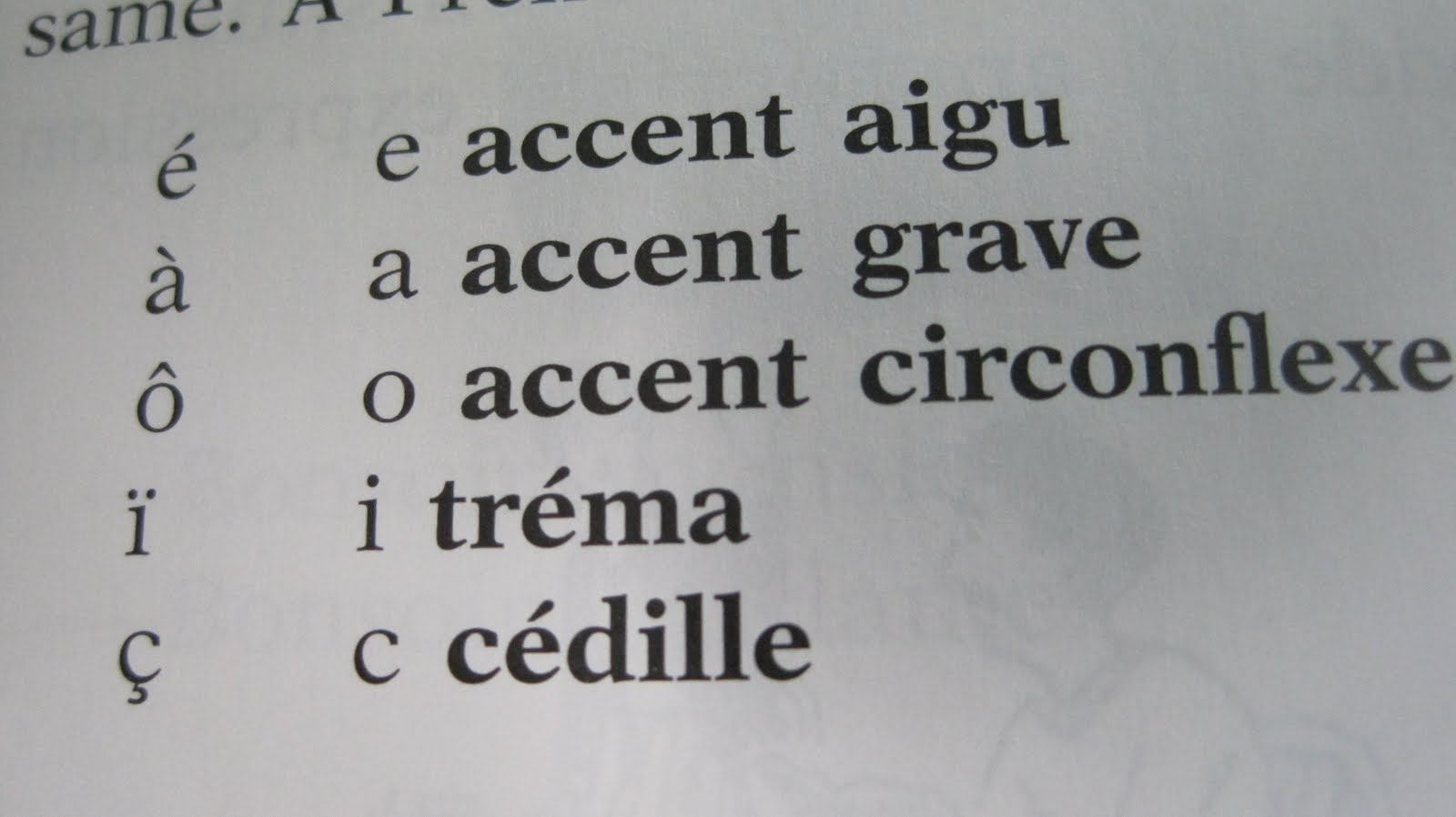
There are five accent marks in the French language: aigu, grave, circonflexe, tréma, and cédille.  The most storied and for me the most fundamentally French, is the circonflexe.  It’s a linguistic example of the passé-présent or le passé qui ne passe pas (the past that doesn’t pass) so often evoked in France, perhaps most commonly in the signs and statues on each street, at each square, always reminding you of someone or something long gone but lingering. 

I cannot cross the Pont Saint-Michel, for example, without remembering the Algerians who drowned under it in the police repression of October 17, 1961, a story summarized in a sentence on a copper pont-side plaque.  


An equestrian statue of Joan of Arc, glittering and gold, on Rue de Rivoli reminds me that it was here, before the street sprung up and became a succession of vendors selling post cards, magnets, and pashminas to Louvre-bound tourists, that Joan tried to enter the city.


The other day, I passed a streetside plaque commemorating someone named Louis Baron, who “fell for the liberation of Paris in 1944.”  Someone had placed flowers in a hook attached to the plaque earlier that week.  In Paris, more than anywhere I’ve visited, the present is always rooted in the past.


The circonflexe hovers like a hat, wind-lifted for a brief moment before it blows away above certain vowels, indicating an “s” that once was but is no more.  It reminds you that forêt was formerly “forest” that hôtel in a past life went by “hostel” that before they became apôtres, the apostles were encumbered not only with a real back-stabber but also with an “s,” that an extra letter once appeared in paraît. 

The circonflexe serves no practical function except to whisper that words, like people, have ancestors, (or ancêtres,) that they’ve left their legacy, even if that legacy may at times elude us.  It reminds me of a beautiful poem by my friend Kim, in which she considers some of the daily signifiers of her Southernness, seeks her inheritance in her everyday surroundings.  She, too, has lived in places where an occasional drawl or y’all marked her as an out-of-towner.

This summer I was chatting with a professor at a conference in Paris and mentioned that I was in school in Louisiana.  Mais . . . she paused, studying me, Comment ça se fait que vous parlez comme 
ça ?  How is it that you speak like that?  Did you spend time in France when you were younger? 

I assumed she meant that I didn’t sound especially American, that nothing in my intonation or accent marked me.  I don’t remember exactly how I responded, but I must have said something along the lines of It’s not always like this. This is a good day, and you are generous.

The linguist Eric Lenneberg argued say that there’s a critical period for language learning, the cut-off point of which is sometime around the beginning of puberty.  If you begin learning a language after that time, you can never really hope to attain native fluency.  I know of a few almost-exceptions, friends who can pass for French much longer than I can, but in the end, our accents always betray us.  A garbled vowel, a fumbled “r,” an “ou” where “u” should be.

It used to be a game.  How long can I go before someone asks me where I’m from? 

Sometimes, only a moment.  This was the case with the taxi driver on one of the first nights in Paris.  I wasn’t in the mood to tell him, to assume all of the connotations of américanité.  Et vous ?  I’d asked, after he’d tried to guess, (Irlandaise ?  Allemande ?)  knowing he wasn’t French either.  Moi, je suis de la race humaine, he volunteered, matching my mystery. 

Why would I want to go undetected in the first place?  Because sometimes an accent is a weapon wielded against you.  At a champagne tasting in Épernay, I’d been chatting with the woman serving us and the husband of another customer at the tasting. 

-I do like this champagne, he lamented, but I don’t know if we can carry another case.
-Oh, but you don’t have to buy a whole case!  Just get a bottle or two!  
We both laughed until his wife snapped.
-Et vous, vous allez lui vendre du champagne avec votre petit accent.  Vous êtes quoi,
stagiare ? 
 -And you, you’re going to sell him some champagne with your little accent.  What are you, an intern ?

We all knew that American interns had certain connotations. 

Mon petit accent.  Other people had called it little, too, but in a different way.  In a way that wasn’t designed to make me feel small.  

I remember that a friend and fellow southerner I used to teach with said that when he’d visited California a girl at a bar had commented on his little accent, one that, because we grew up in the same place, I had never especially noticed.  “That accent,” she’d said, “It’s gonna get you laid.”

It amused me because I’d never really thought of a southern accent as an asset, had tried to shed mine even, and did, to some extent, as I taught English as a foreign language.  But, like the circonflexe, it was always vaguely hovering over me, reminding me of a past from which I felt a little detached but that was still a part of me. 

My boyfriend has once teased me when we were living in France.  When you talk to your mom on the phone, you sound so southern.  When he said “southern” he sounded so French.  He said it the intuitive way.  Not “suthern” but “south-ern.”

The other English teachers in the department marveled at the funny exoticism of my American accent, instructing the students to listen for the differences.  They had all studied in England and sounded like Julie Andrews, to me.  Not that I blamed them for preferring the British accent: it was a preference shared by F. Scott Fitzgerald.  I’d read that when he was living in Paris, he’d hired a British governess for his daughter, Scottie, in the hopes that she’d sound nothing like her parents.

Back to the circonflexe.  In the early nineties, a group of language reformers proposed a series of changes that would normalize the spelling of certain words, minimizing inconsistencies in spelling and grammar.  One of the suggested alterations was the elimination of a certain accent inutile.  Afterall, didn’t it just confuse people?  Wasn’t it just a leftover legacy from Latin, detached from the present just as it was detached from the letter over which it hovered? 

Eyebrows arched en circonflexe as its defenders grew combative.  As it turned out, no one really wanted to see the cironflexe effaced.  Some people would say it’s about elitism, about taking a certain pride in being the kind of person who always remembers the circonflexe, while others forget it, the way some English speakers take pride, for example, in knowing the distinction between “less” and “fewer,” in never making an apostrophe error.

As I speak to my students and they repeat after me, I can hear how they echo back the imperfections in my own accent, how with good faith, they imitate every note, even when it’s off-key, even when I sound more American than French.  I think they know, but they don’t mind.  I don’t mind either.  Like the circonflexe, I have come to accept my accent, even like it.

Why?  For the same reason I don’t think the argument was ever about elitism.  I think it’s about knowing where you’re from, remembering where you’ve been, and keeping the souvenir.

Sunday, August 22, 2010

Bubbles: Comme fanent les roses


Venez vite, je bois des étoiles !

Come quickly, I’m drinking stars!

-Dom Pérignon


Do you remember Miami Subs?


It’s 8 P.M. in Paris, which makes it 2 P.M. in Chapel Hill, North Carolina. If you changed the “P.M.” to an “A.M.” and rewound the clock ten years, we would all be twenty-one and in college at UNC. The bars would just be closing, and we might be hungry.


They do remember Miami Subs. Everyone who went to college in that town a decade ago does.


“They” are Addie and Burleigh, whom I have known since college, and Scott, whom I met a few months ago. Actually, Scott doesn’t remember it because he had his post-bar munchies in a college town in Michigan. We try to explain.


“The thing is," said Addie, “when you walked in, you actually felt like you were in Miami.”


Miami Subs was a pink and blue neon blaze of a fast-food joint that had more tacky charm than your typical late-night establishment. Rosy flamingoes and turquoise ocean waves beckoned you into a painted beach scene, a mural-mirage on the wall. Everything was fluorescent and flashing under a neon sun that didn’t set until 3 A.M.

Miami Subs served the usual five-dollar fast-food fare: bacon cheeseburgers, cokes, curly fries . . . but they also had pitas and key-lime pie, seafood platters, Philly cheese-steaks, a startling array of menu options for a clientele often too inebriated to sort through so many options.

There was one item on the menu that truly distinguished Miami Subs from every other franchise I’d frequented. Along with your cheese-steak or curly fries you could order, for the more sizable sum of 99 dollars, a bottle of Dom Pérignon.

I’d never seen anyone purchase any, but the temptation was there. The cool glass bottle beckoning through the glass refrigerator behind the cash register.

Last week, I took a day trip to Épernay, a quaint little town in the champagne region, famed for its caves. As you step out of the tourist office, you find yourself on the route de champagne, a yellow brick road of maisons de champagne which begin both literally and historically with Moët et Chandon, the first of the producers, founded in 1743. Moët et Chandon is where they make Dom Pérignon: there’s a statue of the legendary Benedictine monk out front.

I took the tour, which finished with a dégustation or tasting. I had decided to splurge and taste two vintage champagnes.

Sometime, our guide said at the end, you should try Dom Pérignon. Her face goes dreamy . . . C’est autre chose. It’s something else.

For a tasting, you have to make an appointment. They bring you into a private room for a lengthy lesson. Then, après l’effort, le réconfort. After the effort, the reward. All in all, it takes about an hour and a half and costs 70 euros.

À qui faut-il que je m’adresse ? Who do I need to talk to? . . . Maybe it was because it was before noon and I’d already had seven glasses of champagne that a 70-euro tasting seemed like a good idea. The man at the welcome desk rebuffed me.

Non. Aujourd’hui, c’est impossible.

“C’est impossible” is an expression that French people use fairly regularly. Most recently I’d heard it when I tried to move a chair around to the other side of the table at a café terrace. C’est impossible ! announced our waiter, swooping in and replacing the wicker chair to its original position. Il y a une loi.

A law? Really?

Oui. You couldn’t place chairs past a certain point on the sidewalk.

But the French also have another expression: Impossible n’est pas français. Impossible isn’t French. It isn’t American either. And as far as I was concerned, I was a little of both.

I ask the barman at the champagne café around the corner that also hosts tastings if he can hook me up. Non. He says they sell Dom Pérignon at a place down the street. He shakes his head and asks if I’ve ever tasted it. Of course not. He says it’s risky. Besides, there are very good champagnes for much less.

Je sais, je sais, c’est clair que c’est une histoire de marque, mais bon . . . il y a aussi une valeur symbolique. I shrug, gallically. Ça représente quelque chose pour moi.

Despite the fact that I’d make the statement so assertively, I wondered what I meant. What was the symbolic value? What exactly did it represent to me? The first answer that came to mind was “credit card debt.”

But the second answer was more like a line from a credit card commercial. Certain experiences, with certain people, at certain times, are priceless. You take opportunites when they’re presented, and you don’t ask a lot of questions or listen to the naysaying bartenders.


Fast-forward a few days from my visit to Épernay. My friends Addie, Burleigh, and Scott are sitting around a wooden table at my apartment before a spread of picnic pleasures.


Chorizo. Dark chocolate. Ripe cherries. Zucchini bread fait à la maison. A block of comté, the color of a daffodil. Fig-infused foie gras on pain d’épices. Cantelope wrapped in prosciutto. Smoked trout and baguette. Hazelnut brownies.


Do you remember Miami Subs? They do. We try to recreate Miami Subs for Scott.


Ten minutes later, Addie pauses . . . What made you bring this up?


I tell them the story of my day in Épernay, how I’d always wanted to taste Dom Pérignon, how I tried while I was there and they said no. And how it was a good thing that I’d been denied. Because if I had tasted it there, I wouldn’t have bought a bottle to share with them.


We abbreviate the lesson we would have received chez Moët et Chandon by reading the description in the booklet that came in the box.


Fresh, crystalline, and sharp, the first nose unveils an unusual dimension, an aquatic vegetal world with secret touches of white pepper and gardenia. The wine then reveals airy, gentle richness before exhaling peaty scents.


On the palette, the attack bursts forth, and matures into a sensual fullness that winds itself around, like a tendril of foliage. Notes of aniseed and dried ginger linger on the skin of the fruit (pear and mango), more textured than ripe. The finish gradually unfurls and then settles, smooth, mellow, all-encompassing.


We pour ourselves glasses, toast, and look pensive as we sip the first swallow.


Burleigh is the first to speak: “It tastes effervescent.”


We laugh, very hard. I imagine us sending the black and silver booklet back to Moët et Chandon with a suggested revision to Richard Geoffrey’s elaborate paragraph. I’d scratch through it with the silver Waterman pen Addie gave me earlier this summer and replace it with Burleigh’s single phrase: It tastes effervescent.


On me dit que nos vies ne valent pas grande chose

Elles passent en un instant, comme fanent les roses


They say our lives aren’t worth much

They pass in an instant, like roses wilt

It was a line from Carla Bruni’s song “Quelqu’un m’a dit,” that came out when she was just an heiress and supermodel, not yet first lady. A couple of years ago, when she passed up a glass of champagne at a state dinner, I had read that everyone immediately took it as a sign of pregnancy. Because, who, really, ever wanted to pass up champagne?

Life passes in an instant. So does champagne. What did it represent?


Dom Pérignon is aged ten years before it’s sold. You can save it for another ten, even longer in your home. But once you open it, you can sip and savor, but you can’t linger too long. You have to drink it before the fizz goes flat.


Venez vite, je bois des étoiles . . .


The first time I read his exclamation, I’d really only considered the second part . . . that image . . . champagne as a constellation, swirling and sparkling on the tongue.


But now I think of the beginning. Come quickly! I imagine the monk calling out to his 17th -century equivalents of Scott, Addie, and Burleigh.


He had wanted to share it, too.